1. Silicon Architecture: P-Type Boron Doping vs N-Type Phosphorus
For the past decade, P-Type Mono PERC (Passivated Emitter and Rear Cell) was the dominant rooftop solar technology. However, P-Type wafers suffer from Light-Induced Degradation (LID) caused by boron-oxygen defect complexes that trigger an immediate 1.5% to 2% power drop upon first sun exposure.
In contrast, N-Type TOPCon (Tunnel Oxide Passivated Contact) utilizes phosphorus-doped silicon wafers that completely eliminate LID defects. Furthermore, an ultra-thin tunnel oxide layer minimizes surface electron recombination, pushing cell conversion efficiencies past 25%.
2. Performance in High-Heat Climates (Central India & MP)
During summer months in Bhopal, Indore, Nagpur, and Jaipur, ambient rooftop temperatures regularly exceed 42°C to 46°C, pushing solar cell operating temperatures above 65°C. As solar panels heat up, electrical resistance increases and power voltage drops.
TOPCon features an industry-leading temperature coefficient of -0.30%/°C compared to -0.35%/°C for Mono PERC. This 0.05% difference translates to significant energy gains during peak sunny hours.
3. Bifaciality Gain with Elevated Pergola Structures
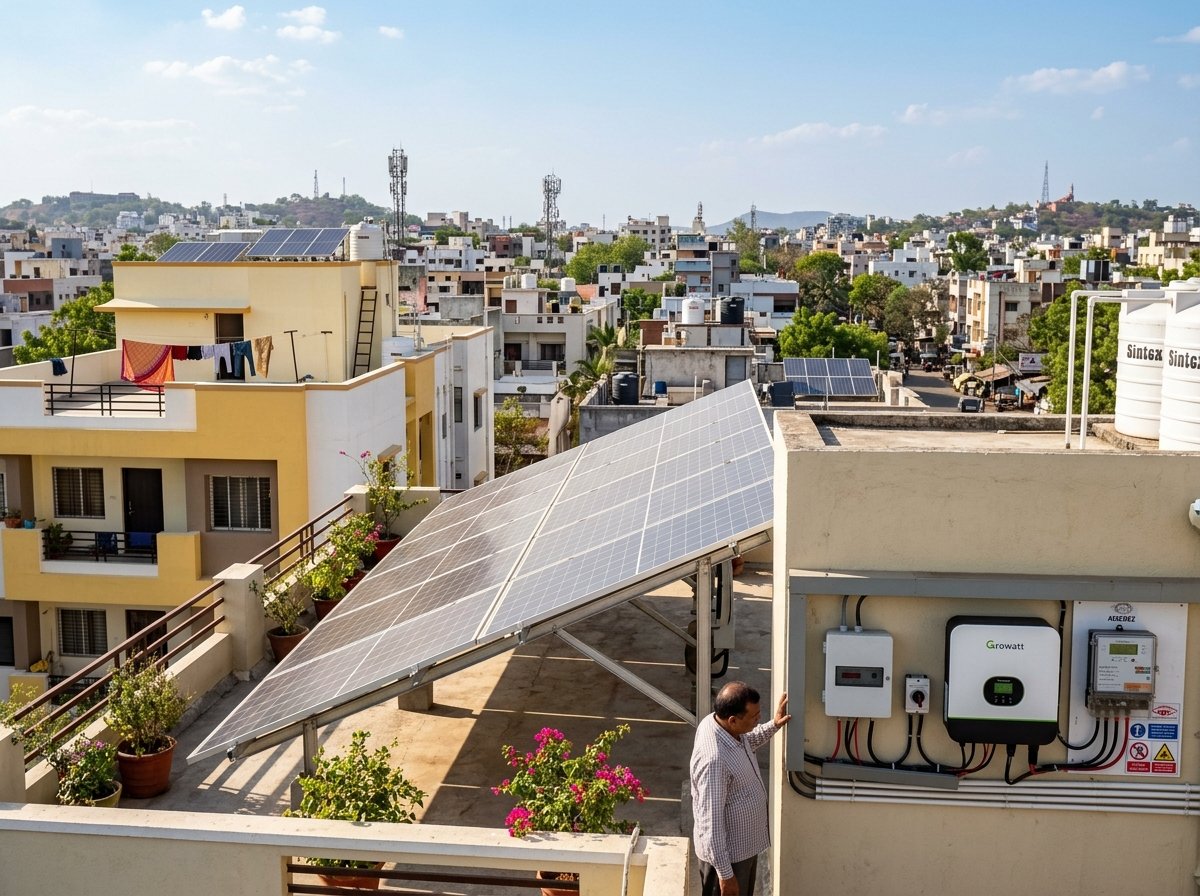
Maxira Solar installs high-rise elevated pergolas (8–10 ft clearance) with reflective white rooftop coatings. This enables bifacial TOPCon modules to capture scattered ambient light from the rear glass surface.
Because TOPCon offers an 80% bifaciality factor (compared to 65%–70% for Mono PERC), homeowners capture an extra 10% to 20% free electricity from the exact same rooftop footprint.